A Practical Education by Randall Stross
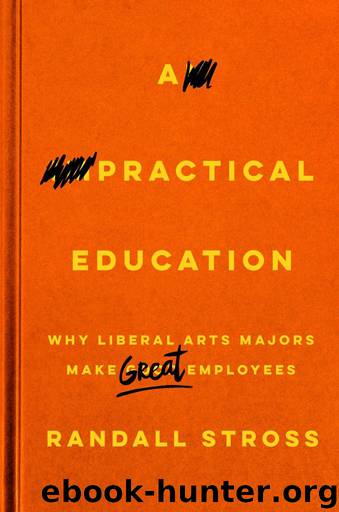
Author:Randall Stross [Stross, Randall]
Language: eng
Format: epub
ISBN: 9780804797481
Publisher: Stanford University Press
Published: 2018-09-04T05:00:00+00:00
CHAPTER 14
THE SHINY NEW THING
THE ASCENSION OF COMPUTER SCIENCE in recent years may seem foreordained, the perfect expression of “a practical education.” But its rise to the preeminent position at Stanford—it is now the most popular undergraduate major—has been rather sudden. In 2009, only 75 graduates majored in computer science, and the multidisciplinary human biology was the favorite major, with 227. But by 2012, the number of declared computer science majors eclipsed those in human biology, and in 2014, 214 graduates majored in computer science, almost triple the number of five years earlier.1 Enrollment has continued to swell since then, catching the department by surprise and forcing the faculty to scramble to provide enough course sections to handle demand.2
This state of affairs contrasts starkly with the years when the university was first getting acquainted with computers and no department of computer science existed. The beginning was in 1953, when Stanford acquired an IBM Card Programmed Electronic Calculator and established the “Computation Center” to serve everyone at the university who wanted to use the machine. The programming was accomplished by physically rewiring the machine, connecting short patch cords into the sockets of a plug board.3
The Computation Center acquired a second machine in 1956, and the next year, the mathematics department appointed as professor George Forsythe, an applied mathematics PhD who had had wide experience with computers at Boeing and at the National Bureau of Standards. Forsythe had cut his computing teeth on a machine that had a capacity of only 256 words and was so unreliable that every program had to be run twice—the results were accepted only if the two runs produced identical output.4 But Forsythe could see what the machines would be capable of one day and was an energetic proselytizer of computing.
In a talk that Forsythe gave in 1961 at a meeting of the American Association for the Advancement of Science, he said,
Those of us who work with automatic digital computers suffer from a certain megalomania. We consider that we are not merely working in an area of great importance—we insist that we are instruments of a revolution—the Computer Revolution. We consider that the revolution is destined to exceed the Industrial Revolution in its impact, and that moreover it is coming off a whole lot faster.5
Occupations that entailed little more than information-gathering and routine decision-making would disappear as computers took over those roles, Forsythe foresaw. Higher education was called upon to provide specialized training that would not be susceptible to automation. Courses should also be developed, he proposed, in “computer appreciation,” which “would be designed to acquaint nontechnical students with the meaning of computers in today’s world, without making them technical experts.”6
The course in computer appreciation did not materialize, but the department of mathematics expanded course offerings in the new field.7 In 1961, the department established a separate division of computer science, which enjoyed autonomy in deciding on new hires; it was headed by Forsythe.8
In the early years of computer science, some faculty members, including Forsythe, believed a
Download
This site does not store any files on its server. We only index and link to content provided by other sites. Please contact the content providers to delete copyright contents if any and email us, we'll remove relevant links or contents immediately.
Spare by Prince Harry The Duke of Sussex(5197)
Navigation and Map Reading by K Andrew(5157)
Tuesdays with Morrie by Mitch Albom(4784)
Machine Learning at Scale with H2O by Gregory Keys | David Whiting(4313)
Cracking the GRE Premium Edition with 6 Practice Tests, 2015 (Graduate School Test Preparation) by Princeton Review(4293)
Never by Ken Follett(3957)
Goodbye Paradise(3810)
What It Really Takes to Get Into Ivy League and Other Highly Selective Colleges by Hughes Chuck(3760)
Fairy Tale by Stephen King(3399)
Harry Potter and the Prisoner of Azkaban (Book 3) by J. K. Rowling(3360)
Pledged by Alexandra Robbins(3179)
Kick Ass in College: Highest Rated "How to Study in College" Book | 77 Ninja Study Skills Tips and Career Strategies | Motivational for College Students: A Guerrilla Guide to College Success by Fox Gunnar(3129)
Reminders of Him: A Novel by Colleen Hoover(3118)
A Dictionary of Sociology by Unknown(3085)
Sapiens and Homo Deus by Yuval Noah Harari(3071)
The Social Psychology of Inequality by Unknown(3031)
Graduate Admissions Essays, Fourth Edition: Write Your Way into the Graduate School of Your Choice (Graduate Admissions Essays: Write Your Way Into the) by Asher Donald(2922)
Will by Will Smith(2920)
Zero to Make by David Lang(2784)
